Toilet Overflowing? What to Do Right Now
Home /
A toilet overflowing is one of those problems that instantly turns a normal day into a stressful one. One minute everything looks fine, and the next you’re watching water rise toward the rim. We take calls about this exact situation all the time, and most homeowners feel the same panic. The good news is that you can often stop the damage quickly if you know what to do first.
Below is exactly how we walk people through it on the phone before we even get to the house.
Toilet Overflowing: First Steps to Stop the Water
It feels urgent, but most toilet overflows are actually quick to stop once you know where to look.
1. Remove the tank lid
Set it somewhere safe. Inside the tank you’ll see a float attached to a fill valve.
2. Lift the float upward
This usually stops the incoming water immediately.
3. Turn off the angle stop valve
Behind the toilet near the floor is a small oval handle. Turn it clockwise until it stops.
4. Do NOT flush again
A second flush almost always makes the overflow worse.
If the bowl is close to spilling, lay towels around the base and protect nearby flooring.
A running toilet can waste far more water than most people realize. In fact, the EPA reports that the average household can waste nearly 10,000 gallons of water every year from leaks, which is why shutting the water off quickly during a toilet overflow matters.
The Plunger — But Used the Right Way
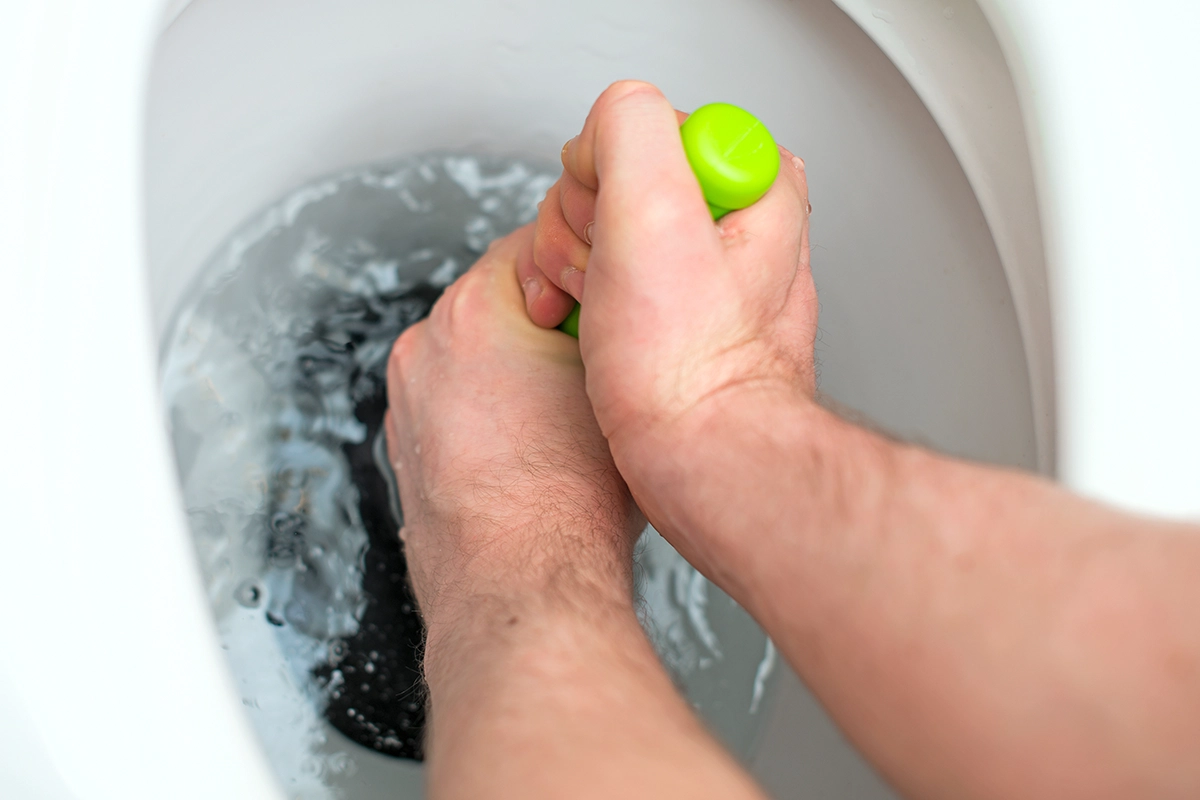
Use a flange plunger, not a flat sink plunger. Create a seal and push slowly first. Then pull up firmly. Fast plunging splashes water and doesn’t clear the clog.
If five or six attempts don’t change the water level, stop. At that point, the blockage may not be in the toilet at all.
A Toilet Overflowing Can Mean a Bigger Drain Problem
Here’s a very important clue:
If another fixture is acting up too, the problem is probably deeper in the system.
Pay attention to these signs:
A clogged kitchen sink around the same time
Shower drains backing up
Gurgling sounds in drains
Water rising in tubs when you flush
Those almost always indicate a drain line blockage rather than a toilet issue.
When Sewer Gas Smells Start
If you’ve also noticed that your home suddenly smells like sewer gas, that’s another strong indicator the line is restricted. A blockage prevents normal airflow through the plumbing system and forces gases back through fixtures.
This is when we start checking the main line rather than replacing toilet parts.
Why a Toilet Overflowing Happens in the First Place
Most people assume the toilet itself broke. In reality, the toilet is often the symptom, not the cause.
Here are the most common reasons:
A blockage in the trap
Too much toilet paper
Foreign objects flushed accidentally
A blocked drain line
A main sewer line obstruction
An overflow rarely starts suddenly. Most people first notice a slow flushing toilet days or even weeks beforehand.
What a Main Line Blockage Actually Means
Your home plumbing feeds into one main drain pipe. Every sink, tub, and toilet connects to it. When that pipe blocks, the lowest opening often shows symptoms first — and that is usually the toilet.
That’s why an overflow can happen even when nothing unusual was flushed.
In those situations, we access the exterior sewer cleanout to clear the obstruction safely. Clearing the line there prevents repeated backups inside the house.
Toilet Overflowing Upstairs? Watch for Damage
An upstairs bathroom overflow can travel quickly.
Water follows gravity. It moves:
under flooring
into subfloors
through ceiling cavities
Within hours, it can appear as staining or dripping downstairs. The CDC warns mold can begin growing within 24–48 hours after water exposure, so drying and cleanup should begin immediately.
When You Should Call a Plumber
Call for service if:
The toilet keeps refilling
Multiple fixtures are backing up
Plunging doesn’t help
You hear gurgling in other drains
Water returns after a few hours
At that point, the issue usually requires professional drain equipment, not a new toilet.
At Clog Heroes Plumbing, Sewer & Drain, we inspect the entire drainage path. We’re not just looking at the bowl — we’re diagnosing why the system pushed water upward in the first place.
If the blockage is in the line, professional drain cleaning is the proper solution rather than repeated plunging.
Preventing the Next Toilet Overflowing
A few habits make a huge difference:
Only flush toilet paper
Avoid “flushable” wipes (they are a major clog cause)
Address slow flushing early
Pay attention to recurring clogs
Schedule a drain inspection if backups repeat
Small warning signs almost always appear before a major overflow.
We Can Help
If a toilet overflowing situation is happening or keeps coming back, it’s time to have the drainage system checked properly.
Clog Heroes Plumbing, Sewer & Drain serves Fredericksburg, VA and the surrounding areas. We’ll locate the cause, clear the blockage, and explain exactly what happened so it doesn’t repeat.
Give us a call and we’ll get your home back to normal quickly and safely.
FAQs About Toilet Overflows
Here are quick answers to questions homeowners commonly ask us:
Turn off the water supply valve behind the toilet and remove the tank lid. Lifting the float usually stops the incoming water. Do not flush again. Most sudden overflows come from a blockage in the toilet trap or the home’s main drain line, not a broken toilet. A flange plunger can clear minor clogs. If the water level doesn’t drop after several attempts, the blockage is likely deeper in the line. Call if multiple drains back up, water returns after plunging, or the toilet overflows repeatedly. That usually indicates a main sewer blockage.What should I do immediately if my toilet is overflowing?
Why is my toilet overflowing all of a sudden?
How do you stop a toilet from overflowing without a plumber?
When should I call a plumber for a toilet overflow?