
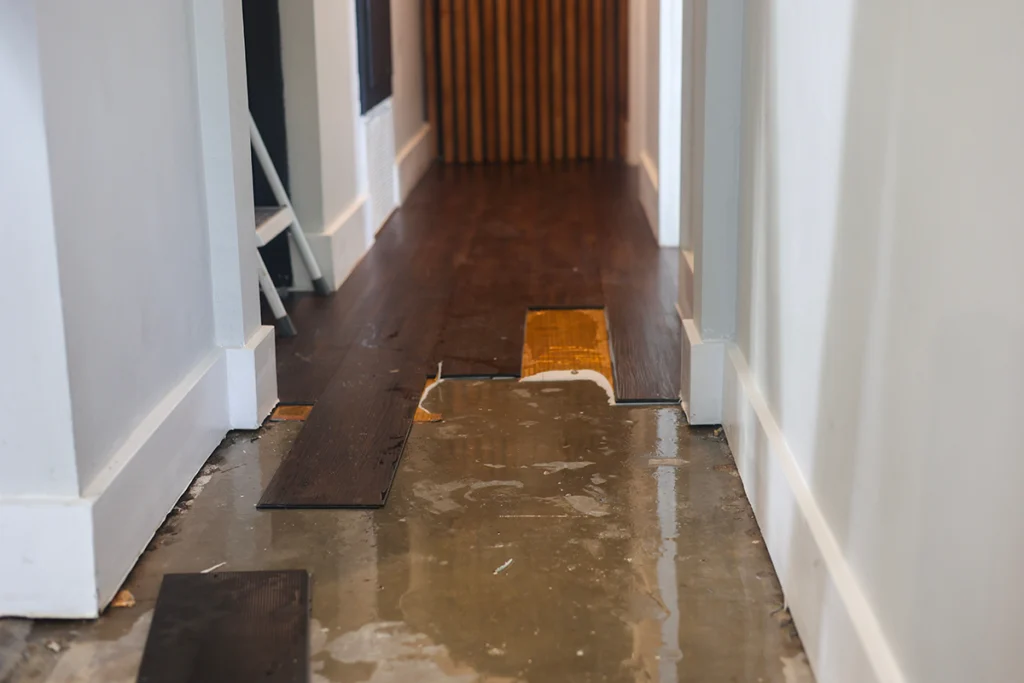
Slab leaks can be stressful because the problem is hidden beneath your home’s concrete foundation. You may only notice higher water bills, warm floor spots, moisture, or strange sounds before the damage gets worse. That’s why professional slab leak detection matters. With the right equipment, our team can locate hidden leaks quickly, explain your repair options, and help protect your home from costly foundation and plumbing damage.
What Is a Slab Leak and Why Does It Happen?
A slab leak occurs when water or sewer pipes beneath your home’s concrete foundation develop a crack or break. These pipes were installed before the concrete was poured. This means they’re trapped underneath tons of solid material. Over time, several factors can cause these pipes to fail.
Corrosion is one of the most common causes. Older copper pipes can corrode from the inside out due to water chemistry. They can also corrode from the outside due to soil conditions. In addition, poor installation practices like kinked pipes or inadequate padding create weak points that eventually fail.
Shifting soil and settling foundations also put tremendous pressure on rigid pipes. Even small ground movements can bend or crack pipes that have no room to flex. Similarly, extreme temperature changes can cause pipes to expand and contract. This leads to stress fractures, although Virginia experiences less dramatic temperature swings than some regions.
Warning Signs You Need Slab Leak Detection
Since you can’t see what’s happening beneath your foundation, your home will give you clues that something’s wrong. Recognizing these warning signs early can save you thousands of dollars in repair costs.
Unexplained Water Bills and Meter Activity
One of the first indicators is a water bill that climbs without explanation. If your usage habits haven’t changed but your bill has spiked, water may be escaping somewhere you can’t see. Our team can verify this by checking your water meter and conducting comprehensive testing. This helps determine if you have a leak somewhere in the system that requires professional attention.
Warm Spots on Your Floor
Hot water line leaks often create warm or hot spots on your floor. If you notice an area of your flooring that feels warmer than the surrounding space, this could indicate a leak beneath the slab. This is especially true when you haven’t been running hot water. This happens because hot water escaping from the pipe heats the concrete above it.
Sounds of Running Water
When your home is quiet and no fixtures are running, you shouldn’t hear the sound of flowing water. If you notice a hissing, rushing, or trickling sound coming from your floors or walls, water may be actively leaking. This leak would be from a pressurized water line beneath your foundation, which is why even a small break can release a steady amount of water until the line is repaired.
Cracks in Walls and Floors
While some foundation cracks are normal settling, new cracks or growing cracks could signal a slab leak. Water escaping beneath your foundation can erode soil. This causes the slab to shift and crack. You might also notice floor tiles that crack or buckle. Plus, you may see sections of flooring that seem to be lifting.
Moisture and Mildew Problems
Excess moisture from a leak can travel upward through your concrete slab. This creates damp carpet, wet baseboards, or mildew growth along floor edges. You might notice a musty smell that doesn’t seem to have an obvious source. This can happen even when your home is clean and dry otherwise.
Professional Slab Leak Detection Methods We Use
We use advanced technology to locate leaks without unnecessary demolition. The goal of professional detection is to pinpoint the exact location of the problem. This way, repairs can be targeted and efficient.
Electronic Leak Detection Equipment
We start with electronic amplification equipment that allows us to listen for the sound of water escaping from pressurized pipes. These specialized devices amplify the distinct frequencies that leaking water creates. This happens as it exits a pipe and enters the surrounding soil or concrete. Because different materials conduct sound differently, our trained technicians can interpret these signals. This helps narrow down the leak location.
Infrared Thermal Imaging
For hot water line leaks, infrared cameras can detect temperature differences in your flooring. These thermal imaging devices create a visual map showing exactly where heat is concentrated. This typically corresponds to the leak location. This non-invasive method allows us to identify problem areas without damaging your floors.
Pressure Testing and Line Isolation
We also perform pressure tests on specific sections of your plumbing system. By isolating different zones and monitoring pressure drops, we can determine which line is leaking. This process helps us rule out other potential sources. It also confirms that the leak is indeed beneath the slab rather than in a more accessible location.
Video Camera Inspection
In some cases, we can insert small waterproof cameras into your plumbing lines. This allows us to visually inspect the pipes from the inside. While this method has limitations with slab leaks due to pipe configuration, it can sometimes reveal damage. For instance, it may show cracks, corrosion, or other issues that help confirm our findings from other detection methods.
What Happens After Slab Leak Detection?
Once we’ve pinpointed the exact location of your slab leak, we’ll discuss repair options with you. The right solution depends on several factors. These include the leak location, the age and condition of your plumbing system, and the extent of the damage.
For isolated leaks in otherwise healthy pipes, targeted repair might involve accessing the damaged section through the slab. In homes with older plumbing systems or multiple potential failure points, rerouting might make more sense. This involves running the affected line through walls or attic spaces rather than breaking through concrete.
Either way, our licensed plumbers will walk you through your options with upfront pricing. We’ll explain what each approach involves. This way, you can make an informed decision about your home.
Why Quick Detection Matters
Time is not your friend when it comes to leaks beneath your foundation. Every day a slab leak continues, more water escapes into the soil beneath your home. This constant moisture can erode the ground that supports your foundation. As a result, this leads to settling, cracking, and structural instability.
Beyond structural concerns, that escaping water also drives up your utility bills. Depending on the size and location of the leak, you could be losing hundreds of gallons per day. Plus, persistent moisture creates the perfect environment for mold growth. This can affect your home’s air quality and your family’s health.
If the leak involves your sewer line rather than a water supply line, the problems multiply. Sewage escaping beneath your home creates serious health hazards. It can also contaminate the soil around your foundation. According to EPA WaterSense, household leaks can waste nearly 1 trillion gallons of water annually nationwide. This makes prompt detection and repair both an environmental and financial priority.
Trust Us for Expert Slab Leak Detection in Fredericksburg
When you suspect a leak beneath your foundation, you need answers fast. Our team brings the specialized equipment and training needed to locate hidden leaks. We do this without guesswork or unnecessary damage to your property. We serve homeowners throughout Fredericksburg, Spotsylvania, Stafford, and King George counties with honest assessments and professional solutions.
We understand that foundation and plumbing problems create stress and uncertainty. That’s why we focus on clear communication throughout the detection process. We’ll explain what we’re testing, what we’re finding, and what it all means for your home. You’ll receive upfront pricing before any repair work begins. This means there are no surprises.
Don’t wait until a small leak becomes a major foundation problem. If you’ve noticed warning signs of a hidden leak, our team can help with professional plumbing services before the damage gets worse. Don’t wait until a small leak becomes a major foundation problem. Contact Clog Heroes today.
Frequently Asked Questions
How much does slab leak detection cost?
Can I detect a slab leak myself?
While homeowners can identify warning signs like high water bills, warm floor spots, or unexplained moisture, pinpointing the exact leak location requires professional equipment and expertise. Electronic listening devices, thermal imaging cameras, and pressure testing tools used by certified technicians aren’t available to most homeowners. Furthermore, proper interpretation of the data requires specialized training. Professional detection prevents unnecessary demolition and costly guesswork.
How long does slab leak detection take?
Most detection appointments take two to four hours depending on your home’s size and plumbing layout. We systematically test and eliminate possibilities to pinpoint the exact leak location. We won’t rush the process because accuracy matters when determining where and how to repair your foundation plumbing.
Will detecting a slab leak damage my floors?
No, modern detection methods are completely non-invasive. We use electronic listening devices, thermal imaging, and pressure testing to locate leaks. This is done without breaking through concrete or removing flooring. Damage only occurs during the actual repair process. We minimize it by knowing exactly where to access the problem.